The challenge of complacency
How complacent attitudes form and why
ARMS Team · 25 October 2026
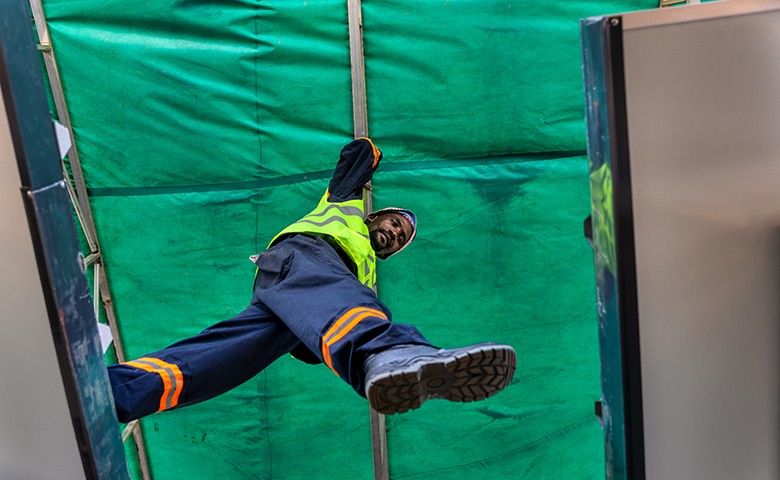
Human nature leans more into risk taking than you might realise and there is a reason for this. We're intelligent and we're rapid thinkers!
The Origins Of Unsafe Attitudes
The prevailing attitudes within an organisational culture are critical to understanding why risk-taking behaviour occurs. There are some attitudes that are common in general and these are very important for setting the right foundations and should be tackled first and foremost when seeking a change in attitudes and the subsequent change in behaviours.
To sustain this and ensure that the change is sustained and becomes engrained within the culture it must then be encouraged and supported within the organisation through the right systems, processes and training. The six attitudes that all relate in some way to 'complacency' are as follows:
A1. Rules sometimes need to be broken to get the job doneA2. With the correct training people do not take risksA3. Doing something regularly means it's always easier to see the risksA4. It's mainly errors that cause accidentsA5. People only take risks when they think it's not dangerousA6. Sometimes accidents just happen



A1. Rules sometimes need to be broken to get the job done
This attitude is one that can be very frustrating for those that design systems and processes in order to try and guide good, risk managed decision making amongst the workforce from senior management to frontliners. There are so many seemingly competing pressures in the workplace. The most basic perception can be that production and safety are in conflict. Whilst we know through research this is not the case the overriding perception is that safety rules are often a barrier to getting the job done rather than a guarantee of completion, a benefit to quality and reputation and a way to prevent loss that can sometimes be catastrophic.
The attitude tends to be one that feels that safety rules (Antecedents) are a burden or an obstacle to achieving productivity goals and that those rules sometimes go 'too far' in seeking to restrict people from getting the job done. Often where there is an absence of historical accidents (Consequences) associated with certain rules (Antecedents) or where there have been accidents but they were a relatively long time ago it can result in a weakening of the value/need for the rule itself. The rule can even become to be perceived as an unnecessary inconvenience.
An operational example of this would be to undertake a job without a PTW because the 'authorising' permit issuer is often unavailable. In this case without the PTW the job cannot proceed but if the personnel, tools and equipment are present then to go ahead without the PTW may be deemed 'necessary' to get the job done.
An example at management level could be the failure to remove a contracting organisation from site even though they have breached safety rules such as 'Life Saving Rules' because it will be difficult to find a replacement contractor with the right skills and equipment to continue with the work.
A2. With the correct training people do not take risks
Behavioural science and especially Skinner's A-B-C model shows us that both 'Antecedents' and 'Consequences' influence our behaviours but that they are not equal. 'Antecedents' typically exert up to 20% influence and 'Consequences' 80%. This means that despite being trained (Antecedent), experienced and therefore competent, a person may still, easily decide to behave in an unsafe way. Historical accidents show us time and time again that supposedly competent persons deviate from the rules and take risks.
A simple operational example could be the use of PPE. A person has been trained in the wearing of and the need for wearing eye protection. However because it is perhaps more comfortable or convenient to leave them off the person puts themselves at risk, despite knowing the reasons for the need to wear them and the fact there is a sign and / or a system of work that states the need and having attended site induction which clearly states the requirement as well.
At the management level an example would be that management who are aware for example of the legal requirements for safety and have attended training courses around duty of care and the requirements of management to ensure risks are adequately controlled and the high costs associated with failure they may not prioritise safety and may not give it the attention and focus it requires.
A3. Doing something regularly means it's always easier to see the risks
Possibly one of the most challenging of all human attitudes towards safety and one that sets us apart from the rest of the animal kingdom. Our attitudes can shift significantly with experience and subsequently so can our behaviour.
As humans we are not governed by instinct which is the primary driver for behaviour in animals. We are far more intelligent and gifted with a brain that has the capacity for extensive memory and recall. This, coupled with a curious nature and one that is determined to push boundaries ingrained in our DNA means that once we have mastered something or feel like we have mastered something we are keen to explore quicker, easier, more rewarding ways of accomplishing the same goal.
Complacency is almost an inevitable tendency for the highly intelligent species that we are.
Unsafe behaviours amongst the frontliners will often involve deviations from the critical Life Saving Rules and the lower risk requirements such as sticking to demarcated walkways, three points of contact, etc. Behaviours that are common everyday requirements and hazards/risks that people become comfortable with. Despite that in the case of the Life Saving Rules if something goes wrong it can be a deadly outcome. A person with 20 years experience of working at height may be in the habit or wearing fall arrest all the time they may also feel perfectly safe with no fall protection at all and if under time pressure may see deviating from this Life Saving Rule as nothing serious.
Noel Burch's competence ladder shows how competence can progress to a point of 'unconsciously skilled' and this can be a perilous state in dynamic environments where hazards and risks are present. Unconscious competence can also be responsible for safe habits (putting on your seatbelt in your car) but in many/most situations in the workplace it is better to remain vigilant and think before acting. Whilst requiring more effort it is almost certainly the preferred state to be 'consciously competent'.
From a management perspective a classic example is relying on the reactive statistics such as AFR to determine how well risk management is being achieved. ie, celebrating 1 million man hours without a LTA may be celebrating lots of unsafe behaviour that has simply not resulted in an accident. Reliance on lagging indicators is one of the most common features of a complacent management team and they may only challenge this status quo when something suddenly goes wrong and a serious outcome occurs. "Safety laws are written in blood" is an often used quote to explain complacency at the management / leadership level
A4. It's mainly errors that cause accidents
"It was just an accident, there was nothing that we could do", a phrase you often hear. Arising out of the notion that even though people are usually intimately involved in the causing of accidents there is little that they could have done to influence the course of events.
Statistically we know that in excess of 95% of accidents involve human behaviour in some significant way but a prevailing attitude is that even though this is the case, the behaviour in question is one of human error. In other words there was no intent on the part of the people involved to cause or to have an accident and therefore there was nothing to be done to prevent it. It was simple human error and humans are fallible and prone to making mistakes.
All of that is true of course but it masks the real nature of the behaviour usually involved. Of course nobody intends to have or cause an accident. However the term 'human error' and the idea that this is unavoidable and natural detracts from the fact we are usually dealing with what is termed a 'violation' of a safety rule. Such a behaviour is carried out with intent but with the expectation that nothing will go wrong. As it is a violation and a matter of 'choice' it could therefore have been prevented.
This removes almost entirely the notion of helplessness around accidents. They CAN be prevented. Statistically in a 'moderately' good or average safety culture you could expect that 80% of any unsafe behaviour will be violations vs 20% errors. As shown by the IChemE in their studies some years ago. So there is hope. We know how to influence people's choices of how they behave.
Frontliners are usually well trained and instructed and provided with method statements and toolbox talks etc. It is so important that the expectation of compliance, with, for example the Life Saving Rules is made clear and simple and the onus is on them to comply and that any deviation will not be regarded as a mistake or an error but rather an intentional violation that puts themselves and others at unacceptable risk.
Once this expectation is clearly established within the culture and is resourced and supported throughout then noncompliance should be met with disciplinary action and compliance should be met with encouragement, celebration and particularly appreciated by management.
This is where effective communication in the form of 'safety coaching' is key and the ideal approach to consider is that of Dr Eric Berne and his Transactional Analysis model. This model clearly recognising that Adult to Adult transactions are most likely to lead to 'willing and repeated' compliance and the creation of a value oriented approach around Life Saving Rules. Driving violations down.
In reality, from a management perspective, there is often insufficient effort put towards recognising and rewarding the effort required by employees to maintain high levels of safety behaviour when working under pressure and often in difficult conditions. Equally it is no excuse for management to suggest a lack of awareness of their own obligations and what is expected of them when 'turning a blind eye' to unsafe practices within their organisation.
A5. People only take risks when they think it's not dangerous
This can be seen in many ways as an extreme version of complacency or at the other end of the spectrum a product of lack of experience and knowledge creating a 'blind spot' to a particular hazard and therefore any associated risks. The person in question would proceed to behave in an unsafe manner, completely oblivious to the threat that a particular hazard poses. There is little to no 'thinking' involved as the person simply does not perceive the hazard.
A good example would be a frontliner who knowing that LOTO should be applied to a particular activity proceeds to operate without isolation because they themselves are not going to press the 'start button'. They may have done this many times before with no bad outcome although they know it could be disastrous. The more such unsafe behaviours occur and the negative outcome doesn't happen then the confidence to take the risk grows. Heinrich's triangle theory shows how significant the ratio of 'loss' to 'no loss' can lead to this attitude.
From a management perspective there are many examples and one could be under-resourcing a project's safety requirements operating a project where the labour workforce is possibly less skilled and does in fact require more support not less. However if the accident rate is low then the attitude may prevail amongst management that despite allowing risk into the operation it won't be a problem (despite high levels of unsafe behaviours). You could think of this as 'turning a blind eye'.
A6. Sometimes accidents just happen
This is an attitude that can be more prevalent in some social and religious cultures than others but is none the less an attitude that again is common across human belief systems. A sense that "what will be will be" or that there is a guiding hand outside of the influence of man that determines whether accidents happen or not. In some cultures the "will of God", in others, a sense simply that we walk a predetermined path. This can also feature in a belief system that views the chaotic nature of life and business as a mix that will inevitably lead to accidents. "Que sera sera", "inshallah", "divine providence", all expressions that can shed some light on this attitude when it comes to safety.
This attitude lends itself to a belief set and thought process that can leave someone thinking "if my number is up, it's up", there's little I can do about it. Of course from a religious stand point it is somewhat more faith based and involves the person placing their trust in their God that whatever happens is the right and correct outcome. Even if that means a serious accident or conversely whatever the outcome it will be that I am safe because that is what I think is God's desire for me.
Heinrich's domino theory is a simple representation of accident causation showing how things don't 'just happen'. They have causes and in most cases these causes are easy to identify. It is also important to note here that 90% of Root/Underlying and Direct causes involve unsafe behaviour.
For frontliners and management it is important to appreciate that accidents have many causes and proper investigation will show this to be the case. It is also very common that people's behaviour has been critical to creating the event and the bad outcome and this could easily have been prevented with simple steps taken.
Similarly for management to recognise that successful health and safety management and loss prevention it is often simple, logical steps that are under resourced or ignored that lead to an accident culture and can therefore easily be prevented by following basic steps within their control.